

Symptoms of Low VO2 Max: In a Nutshell
If you’ve been searching for the symptoms of a low VO2 max, chances are you’re feeling out of breath after light activity, fatigued too quickly during workouts, or just not bouncing back the way you used to. Maybe it’s climbing stairs, jogging a few minutes, or simply keeping up with your daily routine — and everything feels harder than it should.
In a nutshell, low VO2 max means your body can’t deliver and use oxygen efficiently during physical effort, which leads to rapid exhaustion, shortness of breath, elevated heart rate, and poor endurance even if you’re otherwise healthy.
In this article, I’ll break down the real warning signs, share what happened when I tested my own VO₂ max, and show you how to improve it — backed by science and personal results.
What are the Symptoms of a Low VO2 Max (Without a Lab Test)
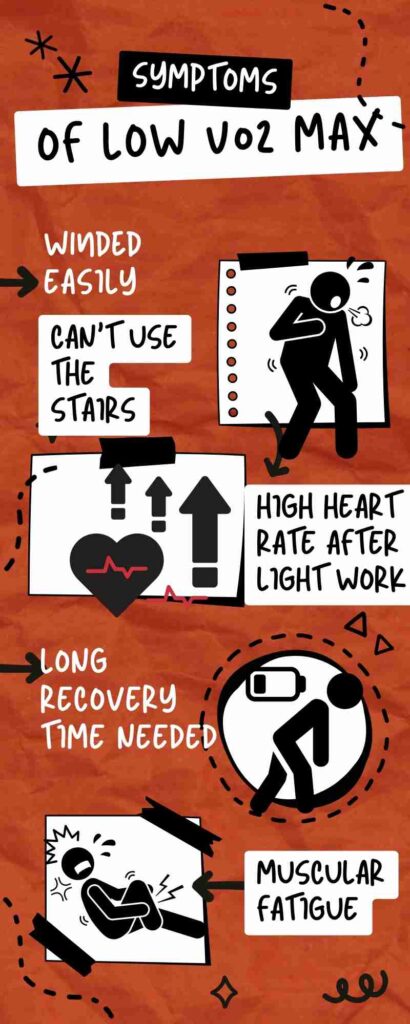
You don’t need a treadmill lab or fancy gear to get a rough idea of your VO₂ max level. If you consistently struggle with basic physical tasks, your body may be telling you something. Below is a high-level checklist to help you figure out if your VO₂ max might be low — based on how you feel and perform in daily life.
✅ Check all that apply to you in the past few weeks:
- ☐ You feel winded after climbing one or two flights of stairs
- ☐ You avoid cardio workouts because they drain you fast
- ☐ Your heart rate feels high even after light activity like walking
- ☐ You need longer than others to recover after exercise
- ☐ You can’t jog or cycle for more than 5–10 minutes without stopping
- ☐ You feel like your endurance is much worse than it used to be
- ☐ You get heavy legs or muscle fatigue quickly, even in light workouts
- ☐ You often feel tired during the day, even with decent sleep
What Your Score Might Mean:
- 0–2 checks → You’re likely in a good range — or at least not severely deconditioned
- 3–5 checks → Moderate signs and symptoms of low VO2 max — time to take action
- 6+ checks → Strong likelihood of poor aerobic fitness — this deserves attention
This checklist isn’t a diagnosis, but it’s a practical first step. Next, I’ll show you how I measured my own VO₂ max without a lab, using tools you might already own.
Beyond the Checklist: How to Accurately Estimate Your VO₂ Max at Home
I’ve spoken about this in my French article here.
The symptom checklist is a great starting point — but if you’re serious about your health and you’ve checked off several boxes, it’s time to get a more accurate estimate. Why? Because knowing your VO₂ max isn’t just about numbers — it’s about taking control of your energy, endurance, and long-term health.
Luckily, you don’t need a lab or a treadmill test. There are two reliable ways to estimate your VO₂ max from home, using either a fitness tracker or a simple walking test.
Option 1: Use a Fitness Tracker with VO₂ Max Estimation
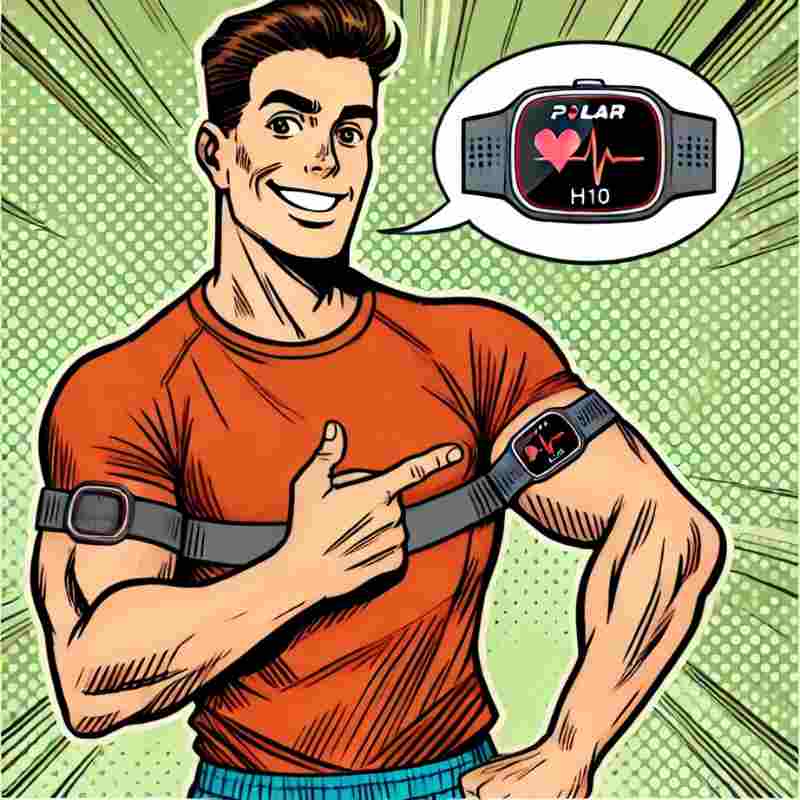
Modern fitness wearables can estimate VO₂ max using heart rate data during runs, walks, or even rest. Here are two of the best:
- Garmin smartwatches (Forerunner, Venu, etc.): estimate VO₂ max based on your heart rate and pace during runs or brisk walks.
- Apple Watch (with Fitness+ or Athlytic app): estimates cardio fitness and classifies it as low, average, or high for your age group.
✅ These estimates are surprisingly accurate when used consistently with outdoor cardio sessions. If you’re already using one of these devices, your VO₂ max may be in your wrist — right now.
Option 2: The Rockport Walk Test (With Calculator)
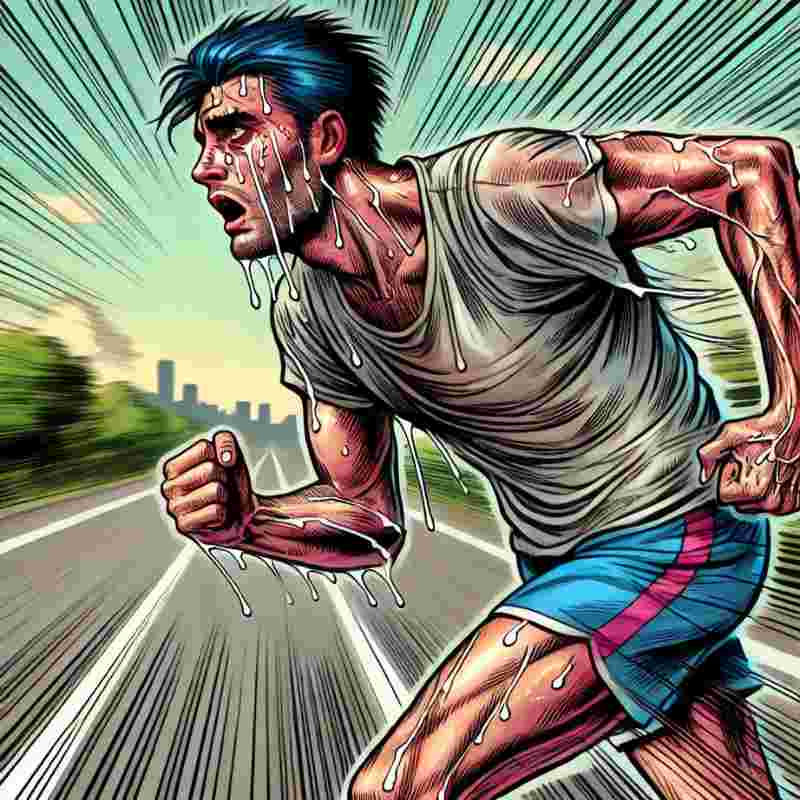
If you don’t have a fitness tracker, this is one of the most validated and accessible ways to estimate your VO₂ max. All you need is:
- A 1-mile track or a GPS app
- A heart rate monitor or stopwatch (e.g. the Polar H10, my personal tool)
- Your body weight, age, and gender
Walk 1 mile as fast as you can (without jogging), then record:
- Your total time
- Your heart rate at the end
What Your VO2 Max Number Actually Means (By Age & Gender)

Whether you just did the Rockport test or checked your smartwatch, you now have a number — maybe 28, 42, or 50. But what does that mean?
VO₂ max is measured in milliliters of oxygen per kilogram of body weight per minute (ml/kg/min). The higher the number, the more efficiently your body uses oxygen — which means better endurance, recovery, and long-term health.
VO2 Max Chart by Age and Gender
(Adapted from ACSM & Cooper Institute standards)
| Age | Excellent | Good | Average | Poor |
|---|---|---|---|---|
| Men | ||||
| 20–29 | >55 | 50–55 | 42–49 | <42 |
| 30–39 | >52 | 46–52 | 40–45 | <40 |
| 40–49 | >48 | 42–48 | 36–41 | <36 |
| 50–59 | >45 | 39–45 | 34–38 | <34 |
| 60+ | >42 | 36–42 | 30–35 | <30 |
| Age | Excellent | Good | Average | Poor |
|---|---|---|---|---|
| Women | ||||
| 20–29 | >50 | 44–50 | 36–43 | <36 |
| 30–39 | >46 | 40–46 | 34–39 | <34 |
| 40–49 | >42 | 36–42 | 30–35 | <30 |
| 50–59 | >38 | 33–38 | 28–32 | <28 |
| 60+ | >35 | 30–35 | 24–29 | <24 |
🔍 Source: American College of Sports Medicine (ACSM), Cooper Institute normative VO₂ max data
How to Use This Chart:
- Find your age group and gender
- Compare your Rockport result or smartwatch estimate
- See where you fall:
- Excellent: Athletically trained or very fit
- Good: Above average health and fitness
- Average: Okay, but room for improvement
- Poor: Likely linked to fatigue, low energy, and higher long-term health risks
Example:
You’re a 42-year-old man with a low VO2 max of 38 ml/kg/min
→ That places you in the Poor category.
→ Meaning: You’re likely experiencing symptoms of such a low VO2 max, like low endurance, elevated heart rate, and slower recovery — and your cardiovascular health is at risk.
Up next: I’ll show you exactly how I improved my VO₂ max in 30 days — using workouts, nutrition, and habits backed by real science.
What You Can Do With These Numbers
Whether your result is good, average, or low, it gives you a starting point.
If your VO₂ max is low, you now know it’s not “just in your head.” You can take targeted steps to improve it — and track your progress week by week.
Why a Low VO2 Max Actually Matters (Backed by Science)
It’s not just about feeling tired or out of shape. A low VO2 max is one of the strongest predictors of poor health outcomes — even early death.
In fact, VO₂ max has been called the single best measure of overall cardiovascular fitness, and the science is clear: the lower your VO₂ max, the higher your risk of disease and mortality. All the more reason to be worried if you have symptoms of a low VO2 max!
What the Research Says:
1. Low VO2 Max and its Symptoms = Higher Risk of Death
A large 2018 study published in JAMA followed over 120,000 people and found that cardiorespiratory fitness (as measured by VO₂ max) had a stronger impact on longevity than smoking, diabetes, or high blood pressure.
📚 Study: Cardiorespiratory Fitness and Mortality – JAMA, 2018
Those with low fitness had up to 500% higher risk of death compared to those with high VO₂ max levels.
2. Low VO2 Max and its Symtoms Is Linked to Chronic Disease
Studies show that lower VO₂ max is associated with a higher risk of:
- Heart disease
- Stroke
- Type 2 diabetes
- Hypertension
- Cognitive decline
📚 Study: VO₂ max and cardiovascular disease risk – European Heart Journal, 2010
3. It Impacts Mental Energy and Brain Health
VO₂ max doesn’t just affect your physical body — it affects your brain. Research has found that higher VO₂ max is linked to better memory, faster learning, and reduced risk of depression and Alzheimer’s.
📚 Study: Cardiorespiratory fitness and brain function – Frontiers in Aging Neuroscience, 2015
The Bottom Line:
A low VO2 max means your body is experiencing certain symptoms like struggling to use oxygen efficiently — and that struggle impacts everything: your energy, your heart, your brain, and even your life expectancy.
My 30-Day VO₂ Max Boost Plan (Simple, Doable, No Lab Coat Needed)

When I realized my VO₂ max wasn’t where I wanted it to be, I didn’t hire a coach or start marathon training. I built a simple, 3-day-a-week plan I could stick to — one that actually worked.
Click here for my FREE 30-day protocol for you, in PDF format.
If you think you are showing symptoms of a low VO2 Max, go ahead and use it. It helped me go from “decent cardio shape” to feeling noticeably stronger, recovering faster, and — yes — seeing my VO₂ max climb week after week on my watch.
Now it’s yours to try.
The Weekly Framework Looks Something Like This…
We’re training 3 times per week, alternating between:
- Zone 2 sessions (long, steady cardio)
- Intervals (short, intense bursts)
- Tempo or mixed workouts (to challenge your comfort zone)
You can swap days around — the key is consistency, not perfection.
Week-by-Week Breakdown
Week 1 – Wake Up the System
- Day 1: 30 minutes brisk walking, cycling, or jogging (Zone 2 pace — easy enough to hold a convo)
- Day 2: Intervals — 20 sec fast, 1:40 min easy × 6 rounds
- Day 3: 20–25 min steady cardio at a slightly uncomfortable but sustainable pace
Goal: Get your heart and lungs used to moving again. Keep it light but intentional.
Week 2 – Add the Pressure
- Day 1: 40 minutes Zone 2 cardio
- Day 2: Intervals — 30 sec fast, 90 sec easy × 8 rounds
- Day 3: 25–30 min jog or bike with a few short hill or stair bursts (just 15–20 sec)
Goal: Raise the ceiling a bit. Stay controlled, not exhausted.
Week 3 – Build Capacity
- Day 1: 45 minutes Zone 2
- Day 2: Intervals — 45 sec fast, 90 sec easy × 6–8 rounds
- Day 3: Tempo session: 10 min easy, 15 min “comfortably hard,” 5 min cool down
Goal: Increase your aerobic engine. Push a little longer, not harder.
Week 4 – Peak & Reset
- Day 1: 30 min light Zone 2 (active recovery)
- Day 2: Intervals — 60 sec fast, 2 min easy × 4–6 rounds
- Day 3: 5K time trial or benchmark run/walk — see how far you’ve come
Goal: Test your progress and give your body space to adapt.
Tips from My Own Journey After I Showed Symptoms of a Low VO2 Max
- VO₂ max changes fast if you’re consistent — I saw results in 3 weeks.
- You don’t need to kill yourself. Stay in control, not survival mode.
- Track your workouts (even just in your phone notes). It helps.
- Use heart rate when possible. If not, use perceived effort: aim for “moderate” on long days and “hard but doable” on interval days.
- Eat well, sleep enough. Your body needs fuel and recovery.
Ready to Try It?
This isn’t a miracle hack. It’s a habit loop — simple, repeatable, and built for real life.
Whether you’re walking, jogging, or sprinting, this plan meets you where you’re at. All you have to do is show up three times a week, move with intention, and give it 30 days.
Your VO₂ max is not fixed. You can improve it — one session at a time.
Let me know in the comments if you’re starting the challenge — I’ll be cheering you on.
Books That Helped Me Understand VO₂ Max and Cardio Fitness
If you’re like me, you don’t just want to follow a program — you want to understand the why behind it.
These are the books that helped me connect the dots between cardio, VO₂ max, and long-term performance. Whether you’re training for life, longevity, or just curiosity, these titles deliver.
1. Endure – by Alex Hutchinson
One of the best books I’ve read on endurance — exploring how the brain and body battle for control during tough workouts. Full of stories, science, and practical insight.
2. The One Minute Workout – by Dr. Martin Gibala
Written by one of the top HIIT researchers in the world, this book breaks down how even short workouts can drastically improve VO₂ max. Backed by lab-tested protocols.
3. 80/20 Running – by Matt Fitzgerald
This book helped me stop overtraining. It’s all about training smarter, not harder — emphasizing the power of slow, steady effort (Zone 2) for VO₂ max and endurance.
4. Spark – by Dr. John Ratey
More focused on the brain than the heart, this book proves how aerobic exercise boosts mental clarity, memory, and motivation. A great reminder of why cardio matters.
5. Training for the Uphill Athlete – by Steve House, Scott Johnston & Kilian Jornet
Geared toward mountain sports, but packed with advanced VO₂ max programming ideas that apply to runners, cyclists, and serious cardio fans.
Final Words: If You Have Symtoms of a Low VO2 Max – It Isn’t a Life Sentence — It’s a Wake-Up Call
If your VO2 max is low and you are experiencing the symptoms I mentioned above, don’t panic — and definitely don’t feel ashamed.
It doesn’t mean you’re broken. It means your heart and lungs are asking for more attention. And the truth is, VO₂ max is one of the most trainable markers of health. You can improve it — and you don’t need to be an athlete to start.
Most people aren’t out of shape because they’re lazy. They’re out of shape because no one ever showed them how to train smart, track progress, and stay consistent without burning out.
This blog — and this challenge — is my way of fixing that.
Start small. Move often. Track what matters.
Because a higher VO₂ max isn’t just about numbers — it’s about feeling stronger, thinking clearer, and showing up for your life with energy.
You’ve got this.